
Blog
How to Increase Restaurant Table Turnover Without Rushing Customers (2026)
-
Posted by
Jigar Doriwala
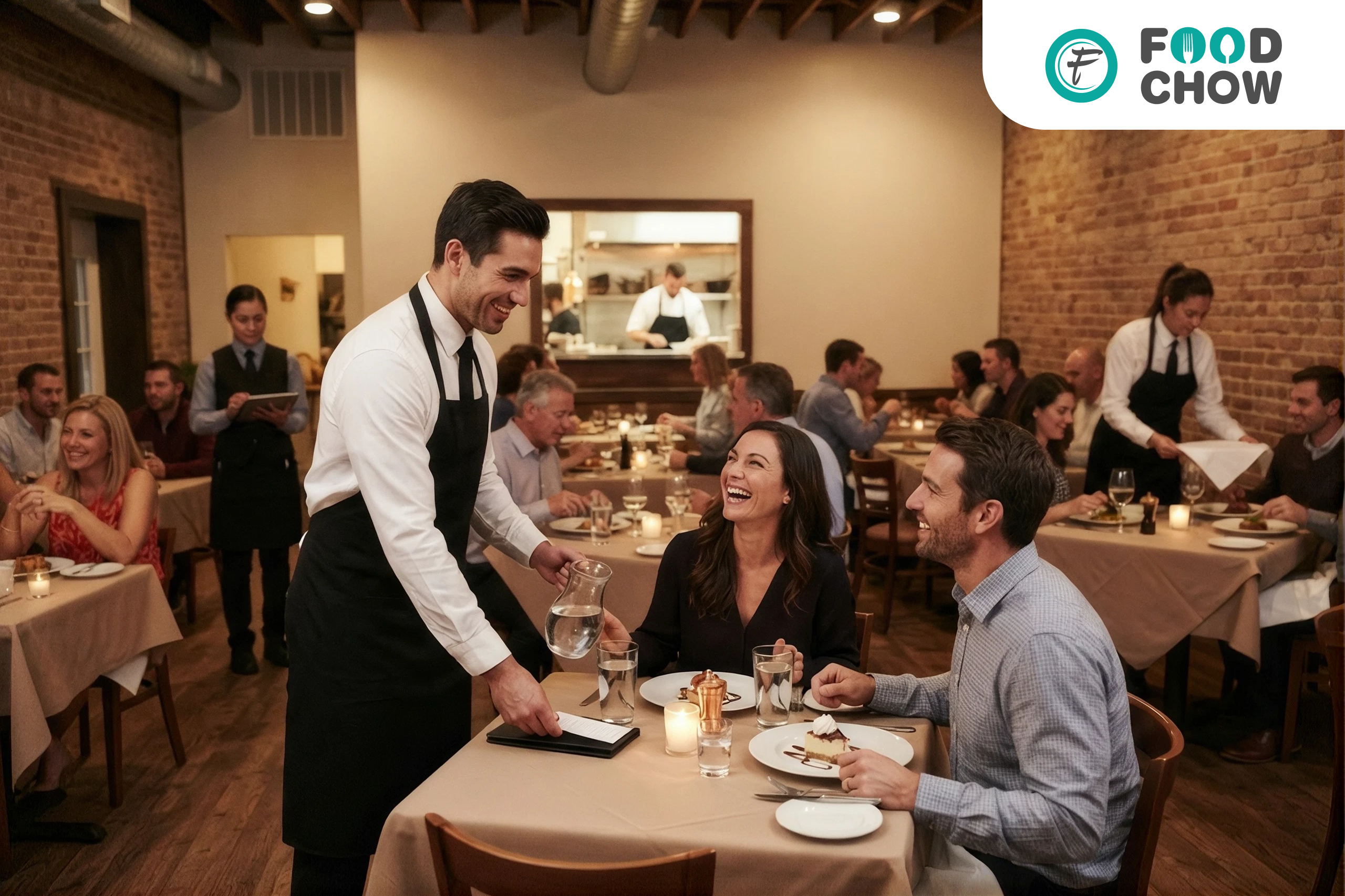
How to Increase Restaurant Table Turnover Without Rushing Customers (2026)
A restaurant's seating is fixed for the night. What isn't fixed is how much of each table's time gets spent waiting on a waiter instead of actually eating. Here's where those minutes go, and how to get them back.

Table turnover time is how long a table is occupied from a guest sitting down to it being ready for the next guest, and it directly caps how many covers a restaurant can serve on a busy night. Most of the time that can be safely cut without rushing anyone sits in operational waits, waiting for a waiter to take the order, waiting for food to reach the kitchen, waiting for the bill, not in the time guests actually spend eating. QR-based table ordering connected to a kitchen display commonly removes 10–20 minutes per table by closing those gaps.
- What table turnover time actually measures
- Why even 10 minutes per table changes revenue
- Where restaurants lose the most time
- The real math: turnover time and monthly capacity
- How table ordering and a kitchen display cut it
- Steps to reduce turnover without rushing guests
- Turnover benchmarks by restaurant type
- Frequently asked questions
Ask a restaurant owner how long a table takes on a Saturday night and most will estimate based on when the last guest left, not on where the actual minutes went between sitting down and paying the bill. That's usually where the opportunity is hiding.
Nobody wants a restaurant that feels rushed. But a meaningful chunk of table time isn't guests enjoying their meal, it's guests waiting on staff, and that part can be shortened without touching the dining experience at all.
FoodChow is a commission-free restaurant technology platform serving restaurants across India and 20+ countries with free POS, table ordering, QR menus, and a kitchen display system.
This guide breaks down where table time actually goes, the real math on how a few saved minutes per table adds up across a night, and how table ordering technology closes the gap without shortening a single guest's meal.
What Table Turnover Time Actually Measures
Table turnover time is the total duration a table is occupied, from the moment a guest sits down to the moment the table is cleared and reset for the next guest. It typically breaks into five stages:
- Seating to order taken — how long before a waiter reaches the table and the order is placed.
- Order taken to food arriving — kitchen prep and ticket-to-table time.
- Eating and conversation time — the part of the meal a restaurant should never try to shorten.
- Meal finished to bill requested and delivered — often the single longest operational wait in the whole cycle.
- Bill paid to table cleared and reset — the final housekeeping step before the next guest sits down.
Why Even 10 Minutes Per Table Changes Monthly Revenue
Seating capacity on a given night is fixed, a restaurant with 20 tables has 20 tables whether it's a slow Tuesday or a packed Saturday. The only lever left to serve more covers in the same window is how quickly each table turns over. That makes turnover time a direct multiplier on revenue capacity during peak hours, not a minor operational metric.
Where Restaurants Lose the Most Time
Across most full-service restaurants, the same few stages account for the bulk of avoidable table time:
- Waiting for a waiter to take the order, especially during a rush when staff are stretched across too many tables.
- Kitchen miscommunication, a handwritten or verbally relayed order that gets delayed or re-confirmed, adding minutes before prep even starts.
- Waiting to flag a waiter for the bill, often the longest single wait of the entire visit, since guests have to actively get staff attention rather than the request being logged automatically.
- Payment processing delays, particularly when a card machine has to be brought to the table and carried back.

None of these stages involve the guest actually enjoying their meal. All of them are pure operational dead time, and all of them are the parts technology can shorten.
The Real Math: Turnover Time and Monthly Capacity
Take a casual dining restaurant with 20 tables, open for a 4-hour dinner service, with an average table currently taking 75 minutes end to end:
| Scenario | Avg turnover time | Table cycles per table (4-hr service) | Extra covers served (20 tables) |
|---|---|---|---|
| Current | 75 minutes | 3.2 | — |
| After cutting operational wait by 15 min | 60 minutes | 4.0 | +16 table cycles/night |
Illustrative calculation assuming an average of 2.5 guests per table and no change in how long guests spend eating. Actual gains vary by restaurant format, service style, and existing bottlenecks.
Sixteen extra table cycles across a busy night, at an average bill of even ₹1,200, works out to roughly ₹19,000 of extra revenue capacity in a single dinner service, purely from removing operational wait time, not from serving guests faster while they're eating.
How Table Ordering and a Kitchen Display Cut It
The two biggest wait stages, order-taking and bill delivery, are also the two that a connected table ordering system removes almost entirely:
- Guests scan a table QR code and order the moment they've decided, no waiting for a waiter to become available.
- The order lands directly on the kitchen display system, removing the delay and error risk of a handwritten or verbally relayed ticket.
- The bill can be requested from the same screen and paid via UPI at the table, removing the wait to flag someone down and the wait for a card machine to arrive.

None of this shortens how long a guest spends eating or talking. It only removes the waiting a guest was never enjoying in the first place. FoodChow's table ordering system is built to connect these steps end to end.
Turn more tables without rushing a single guest.
FoodChow's table ordering system removes order-taking and bill-wait delay by connecting QR ordering directly to your kitchen display and POS, so more covers fit into the same busy hours.
Free setup, live the same day.
Set Up Table Ordering → Talk to Our TeamSteps to Reduce Turnover Without Rushing Guests
- Time your current turnover honestly. Track a sample of tables over a busy service to see where the minutes are actually going, before assuming which stage is the bottleneck.
- Put QR ordering on every table so guests can order the moment they're ready, without depending on staff availability.
- Connect ordering directly to the kitchen display to remove ticket delay and reduce order errors that cause re-cooks.

- Let guests request and pay the bill from the table instead of needing to flag a waiter down twice, once for the bill, once for the card machine.
- Reassign the time staff save on order-taking to guest experience, checking in, recommending dishes, rather than cutting staff headcount.
- Re-measure turnover after the change to confirm the gain is coming from operational wait, not from guests actually eating faster.
Turnover Benchmarks by Restaurant Type
| Restaurant format | Typical turnover time | Where tech saves the most |
|---|---|---|
| Quick-service / café | 20–35 minutes | Order-taking and payment speed |
| Casual dining | 45–75 minutes | Order-taking and bill wait |
| Fine dining | 90+ minutes | Limited, pace is intentional |
General benchmarks, actual turnover targets should reflect the dining experience a restaurant is selling, not just speed for its own sake.