
Blog
Cloud Kitchen Business in India (2026): Setup Cost, Licenses & Technology Stack
-
Posted by
Jigar Doriwala
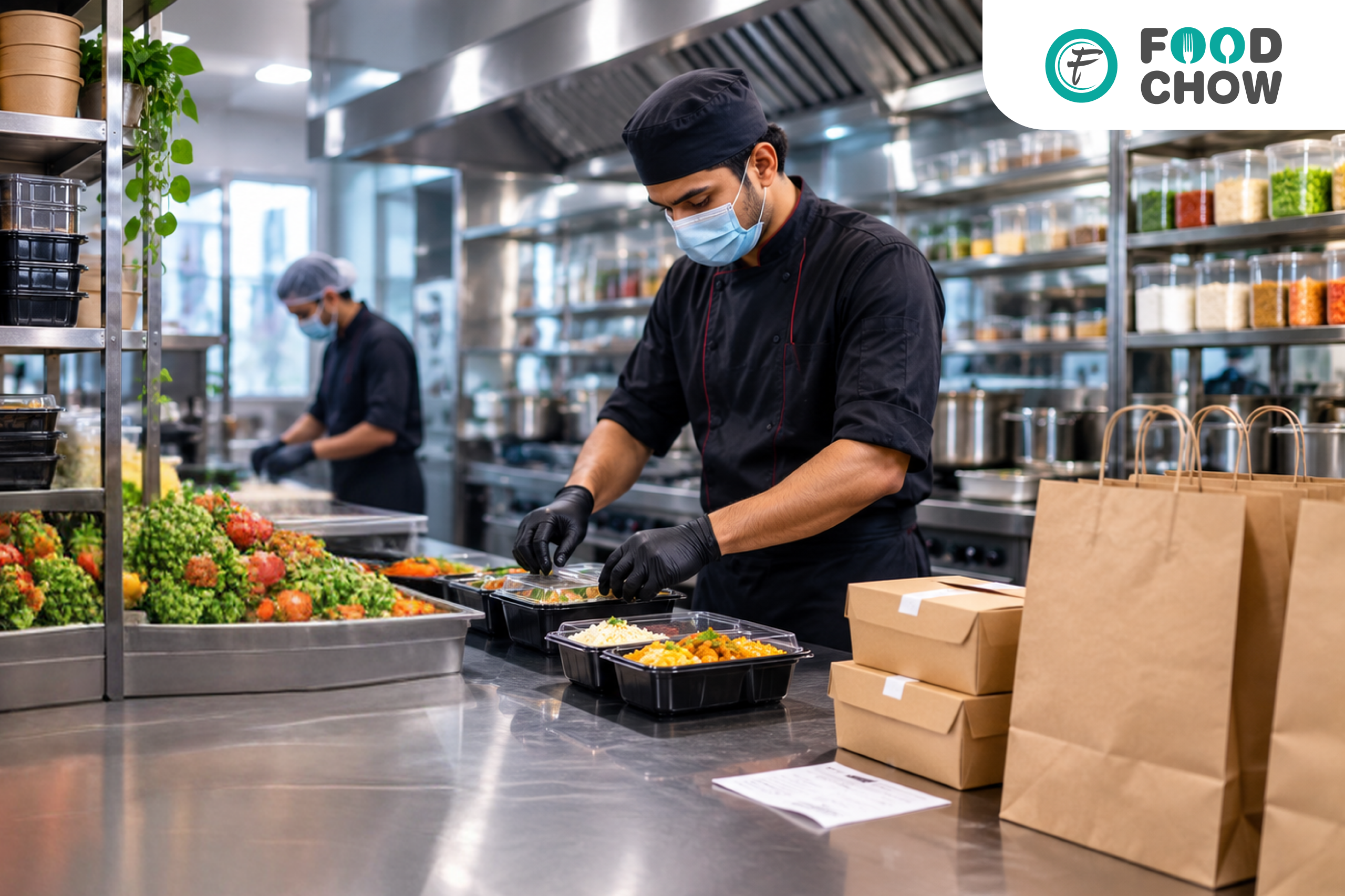
Cloud Kitchen Business in India (2026): Setup Cost, Licenses & Technology Stack
No dining room, no décor budget, no front-of-house staff — a cloud kitchen looks cheaper to start on paper. Here's the real setup cost, the licenses you can't skip, and the tech stack that keeps it from being fully at the mercy of aggregators.

A small, single-brand cloud kitchen typically costs ₹4–9 lakh to set up in India, covering kitchen equipment, a modest space deposit, licenses, packaging, and initial working capital — well below what a dine-in restaurant needs. The catch is that a cloud kitchen has no walk-in footfall to fall back on, so it leans almost entirely on aggregators for discovery in the early months, which makes commission a bigger share of the cost structure than it is for a dine-in restaurant.
- What is a cloud kitchen
- Cloud kitchen setup cost breakdown
- Licenses and registrations you need
- The technology stack a cloud kitchen actually needs
- Aggregator dependency: the hidden risk
- Cloud kitchen vs dine-in restaurant: cost comparison
- Step-by-step: launching a cloud kitchen
- Frequently asked questions
Cloud kitchens got popular for an honest reason: no dining hall to fit out, no host staff, no décor budget, and a much smaller commercial space than a full restaurant needs. That lower entry cost is real. What often gets left out of the pitch is what a delivery-only brand depends on to survive its first year — and that dependency has a cost of its own.
This guide walks through the real setup cost, the licenses that have to be in place before the first order, the technology a cloud kitchen actually needs to run smoothly across multiple order channels, and where the aggregator commission math changes once the brand has a repeat customer base.
FoodChow is a commission-free restaurant technology platform serving restaurants and cloud kitchens across India and 20+ countries with free POS, online ordering, QR menus and a white-label partner program.
What Is a Cloud Kitchen?
A cloud kitchen, also called a delivery-only or virtual kitchen, is a commercial kitchen space set up purely to prepare food for delivery, with no dining area for walk-in customers. Orders arrive through delivery aggregators, a brand's own website or app, or WhatsApp, and go straight to the kitchen for preparation and dispatch. A single cloud kitchen space can also run multiple brands out of the same kitchen, a model often called a "multi-brand" or "virtual restaurant" setup.
Cloud Kitchen Setup Cost Breakdown
For a small, single-brand cloud kitchen in a tier-1 or tier-2 Indian city, here's a realistic breakdown of what the first few months of setup typically cost:
| Cost head | Approximate range |
|---|---|
| Kitchen equipment (burners, fryers, refrigeration, exhaust) | ₹1,50,000–3,50,000 |
| Space deposit and basic fit-out (200–400 sq ft) | ₹1,00,000–2,50,000 |
| Licenses and registrations | ₹15,000–40,000 |
| Packaging inventory (first batch) | ₹20,000–40,000 |
| POS, ordering software and hardware | ₹0–25,000 |
| Initial marketing and aggregator onboarding | ₹15,000–50,000 |
| Working capital buffer (1–2 months) | ₹50,000–1,50,000 |
| Approximate total | ₹4,00,000–9,00,000 |
Illustrative figures for a small, single-brand cloud kitchen. Actual cost varies significantly by city, kitchen size, cuisine complexity, and number of brands run from one location.
Compare that to a mid-size dine-in restaurant, where fit-out, furniture, décor, and a larger space alone can run well past ₹15–25 lakh before the kitchen equipment is even added. The gap is real, which is exactly why cloud kitchens are the common first step for many new restaurant entrepreneurs.
Licenses and Registrations You Need
A cloud kitchen still sells cooked food to the public, so the licensing requirements are close to what a dine-in restaurant needs, minus anything tied to seating or liquor service:
- FSSAI food license — mandatory for any food business in India; the category (basic, state, or central) depends on projected turnover.
- GST registration — required once turnover crosses the applicable threshold, and effectively mandatory earlier if listing on aggregators, since most require a GSTIN to onboard.
- Local municipal health or trade license — issued by the local municipal corporation, confirming the kitchen meets local health and sanitation rules.
- Fire safety NOC — a no-objection certificate confirming basic fire safety equipment is in place, required in most states before a commercial kitchen can operate.
- Shop and establishment registration — a state-level registration required for most commercial premises, including kitchens with no walk-in customers.
Requirements vary by state, and processing times can run from a couple of weeks to a couple of months, so starting the license paperwork well before the kitchen fit-out is complete avoids losing weeks of otherwise-ready operating time.
The Technology Stack a Cloud Kitchen Actually Needs
Because every single order arrives through a screen, a cloud kitchen depends on its technology stack more than a dine-in restaurant does. The essentials:
- A POS system that tracks orders and inventory across every brand run from the kitchen, not just one menu.
- A kitchen display system (KDS) that pulls in orders from every channel, aggregators, direct website, and WhatsApp, into a single queue so the kitchen isn't juggling three separate tablets during a rush.
- A direct ordering channel — a branded website, WhatsApp ordering line, or shareable order link — so repeat customers can be moved off aggregator commission over time instead of paying it on every single order indefinitely.
- Inventory and recipe tracking to keep food cost predictable across multiple brands sharing the same raw ingredients.

FoodChow's free POS software and kitchen display system are built to handle multi-brand cloud kitchen setups, pulling every channel into one order queue.
Running a cloud kitchen? Reduce what aggregators take.
FoodChow gives your cloud kitchen a free branded ordering website, WhatsApp ordering, and a POS that pulls every channel into one kitchen queue — so repeat customers stop costing you 20-30% commission every time they reorder.
Free setup, live the same week.
Set Up Direct Ordering → Talk to Our TeamAggregator Dependency: The Hidden Risk
This is the trade-off that doesn't show up in most cloud kitchen cost breakdowns. A dine-in restaurant has three ways a customer finds it: walking past, word of mouth, and aggregator apps. A cloud kitchen, with no storefront and no street visibility, usually has exactly one working channel in its first months: aggregators.
That means the same 18–30% commission that a dine-in restaurant can partly offset with walk-in and repeat-visit customers falls on effectively every order a new cloud kitchen makes, at least until it has built a customer base willing to reorder directly. A cloud kitchen doing 600 aggregator orders a month at a ₹400 average order value can lose upward of ₹50,000–65,000 a month to commission and related charges alone — a heavier load, relative to revenue, than most dine-in restaurants carry.
The way experienced cloud kitchen operators manage this: treat aggregators purely as the discovery channel for new customers, and move every repeat customer to a WhatsApp reorder link or branded ordering page the moment they've ordered once. Packaging inserts with a QR code or WhatsApp number are the simplest way to make that shift happen without any extra marketing spend.

Cloud Kitchen vs Dine-In Restaurant: Cost Comparison
| Factor | Cloud kitchen | Dine-in restaurant |
|---|---|---|
| Typical setup cost | ₹4–9 lakh | ₹15–25 lakh+ |
| Space required | 200–400 sq ft | 800–2,000+ sq ft |
| Front-of-house staff | Not required | Required |
| Walk-in / footfall discovery | None | Available |
| Aggregator dependency | Very high early on | Moderate |
| Multi-brand capability | Easy, same kitchen | Requires separate spaces |
| Time to break-even (typical) | Often faster | Often slower |
Step-by-Step: Launching a Cloud Kitchen
- Finalise the menu and cuisine focus. A tight, deliverable-friendly menu, dishes that travel well, performs better than a broad menu that's hard to prep consistently across every order.
- Secure the kitchen space and start license paperwork immediately. FSSAI, GST, municipal, and fire NOC approvals can take weeks, so don't wait until the fit-out is done to begin.
- Fit out the kitchen and set up the technology stack. POS, kitchen display, and inventory tracking should be running before the first live order, not added afterward.

- Onboard on aggregators for discovery. This remains the fastest way for a brand-new cloud kitchen to get its first customers.
- Set up a direct ordering channel from day one. A branded ordering page and WhatsApp ordering number, even with low initial volume, starts capturing repeat customers immediately instead of retrofitting this later.
- Track the aggregator-vs-direct order split monthly and actively push repeat customers toward the direct channel through packaging inserts and small incentives.